
Hiki: Autism ADHD & ND Dating
HIKI, INC.Social
3.51.12K Reviews
- Version
- 4.0.22
- Installs
- 100.00K
- Age Rating
- Mature 17+
Screenshots
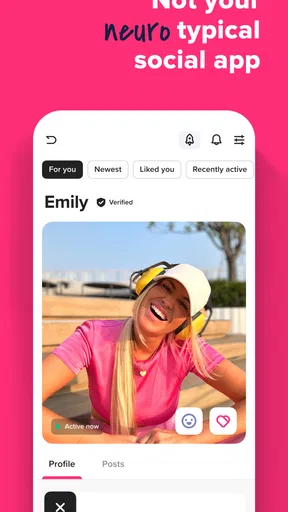
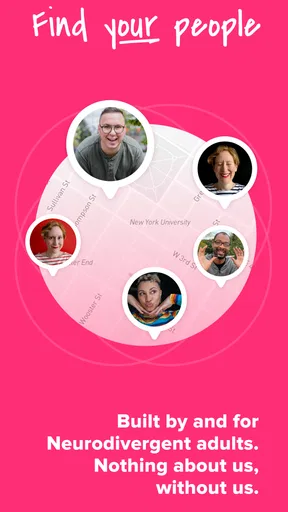
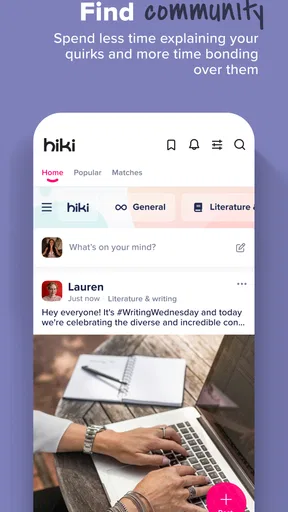
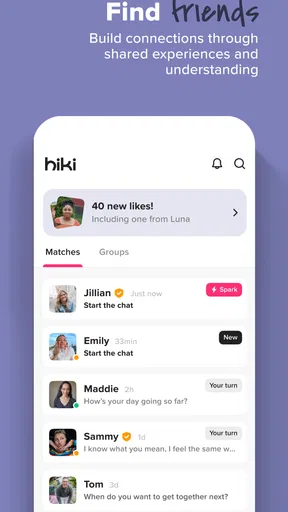
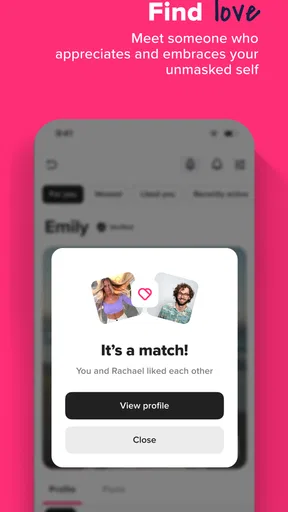
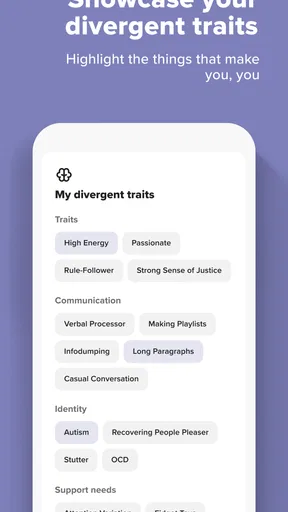
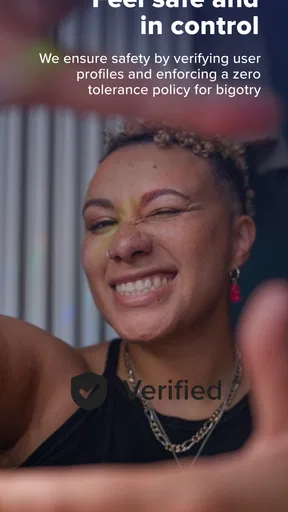

Our Review of Hiki: Autism ADHD & ND Dating
 Analysis by Appyee
I approached Hiki as more than another dating app. Its focus is on autistic, ADHD, and otherwise neurodivergent people looking for dates, friendships, or a sense of community, so trust matters here in a very practical way. The experience needs to feel understandable, respectful, and manageable before anyone starts sharing personal details with another person.
Hiki is a free social app from HIKI, INC., with a Mature 17+ age rating. It has passed the point of being a tiny experiment, with more than 100,000 installs, although its average score sits at 3.5 from roughly 3,900 ratings and about 1,100 written reviews. That combination tells me the app has a real audience, but also that it will not satisfy everyone equally.
My overall impression is cautious but positive. The concept is specific enough to be useful, especially if mainstream dating apps make you feel pressured to communicate in one narrow way. At the same time, Hiki is still a social platform, not a guaranteed safe space or a substitute for careful online habits. The best results come when I treat its matching and conversation tools as starting points rather than proof that another person is trustworthy.
How Hiki builds trust around a neurodivergent audience
The biggest strength is its clear purpose. Instead of asking users to explain why they want a different social experience, Hiki places neurodivergence at the center of its identity. That can remove an awkward first step: I do not have to begin every interaction by defending my communication style or explaining why certain social situations are tiring.
The app’s store summary presents three connected uses: meeting people, dating, and finding friends. That matters because not every user wants romance, and forcing every connection into a dating frame can create unnecessary pressure. I found the broader social angle more appealing than a dating-only approach. Someone can arrive looking for companionship and still use the platform without pretending to be ready for a relationship.
There is also a useful distinction between feeling understood and being automatically safe. Hiki’s audience may share experiences around autism, ADHD, or other forms of neurodivergence, but that does not mean every person will communicate well, respect boundaries, or have the same needs. I would still judge each conversation on its behavior rather than on a profile label.
This is where Hiki differs from a usual mainstream dating service. Large apps generally offer a wider pool and more familiar discovery patterns, but they can feel optimized for fast decisions, polished photos, and quick replies. Hiki’s appeal is less about maximizing volume and more about finding people who may already understand why direct communication, slower replies, sensory considerations, or clear expectations can matter.
The trade-off is obvious: a more focused community can be easier to relate to, but it may not provide the same breadth of local matches as a general-purpose app. If your priority is meeting someone nearby quickly, a larger service may work better. If your priority is reducing the need to translate your identity before a conversation can begin, Hiki is more relevant.
What I would check before creating a profile
Before signing up, I would decide what I actually want from the app. “Dating,” “friends,” and “meeting people” sound close, but they lead to very different conversations. Writing a simple intention in my profile would help prevent mismatched expectations. I would also avoid sharing a workplace, daily route, phone number, or other identifying details in the first exchange.
The Mature 17+ rating is an important reminder that this is not a children’s social environment. A younger user should not treat the app as suitable simply because the interface looks approachable. Adults should also remember that an age rating describes the intended audience, not the character of every individual they may encounter.
I would take time to read the account and privacy choices shown during setup instead of tapping through them automatically. The most trustworthy decision is an informed one: understand what the app asks for, which parts of a profile are visible, and what options are available for controlling contact. If a permission or prompt feels unrelated to the way I plan to use Hiki, I would pause and decide whether granting it is necessary.
Verified controls matter more than reassuring language
When I review a social app, I look for visible choices rather than assuming that a friendly mission statement guarantees good privacy. Hiki should be judged by the controls a user can actually see: account settings, profile editing, contact preferences, and the available ways to handle unwanted interactions. I would inspect these areas immediately after registration, before building a detailed profile.
A useful workflow is to create the minimum profile needed to understand the service, then revisit the settings while the account contains very little personal information. This gives me a chance to learn how visibility and account management work without first exposing sensitive details. It is a small step, but it prevents the common mistake of discovering important controls only after a problem occurs.
I would also check whether every profile field feels necessary. Neurodivergent users may want to describe communication preferences, boundaries, interests, or support needs, but not every detail belongs in a public-facing profile. A good rule is to share information that helps someone understand how to interact with me, while keeping anything that could identify, locate, or pressure me private until trust develops.
Hiki’s current version is 4.0.22, and the app requires Android 8.0 or later. That makes device compatibility a practical checkpoint before relying on it as a primary social tool. I would keep the application updated through the official store and use a device lock, especially if messages or profile details are sensitive.
Data-sensitive moments happen during ordinary conversation
The most important privacy decisions do not usually happen at registration. They happen after a pleasant conversation, when someone asks for a real name, another messaging account, a workplace, a diagnosis, or a live location. Because Hiki is designed around identity and connection, users may feel that sharing personal context is part of being honest. I think honesty should still be gradual.
I would keep early conversations inside the app until the other person has shown consistency. Moving immediately to another service can remove some of the context and controls that helped me decide whether the interaction felt appropriate. If I eventually move elsewhere, I would use a separate username or account where possible and avoid linking the new contact to my full personal profile.
Location deserves special care. Even a casual comment about a regular café, commute, or neighborhood can make someone easier to find. I would describe general interests rather than predictable routines, and I would never use a first meeting to test whether a stranger can respect a boundary. A public venue, an independent route home, and a friend who knows the plan are sensible regardless of how comfortable the chat feels.
Photos can reveal more than expected. Backgrounds may show house numbers, school names, work badges, medication, or family members. I would choose images with neutral surroundings and review them as if I were a stranger trying to identify me. This is especially useful for users who want to express personality without exposing their home or daily life.
There is a second kind of data sensitivity: emotional information. Neurodivergent users may discuss burnout, masking, diagnosis, executive-function challenges, or past experiences because the audience feels more understanding. Those subjects can create meaningful connections, but they can also be used by manipulative people to create fast intimacy. I would share one layer at a time and notice whether the other person responds with respect rather than turning vulnerability into pressure.
How to use the app without surrendering control
My preferred approach is to make the profile specific about interaction, not exhaustive about personal history. For example, I might explain that I prefer direct questions, need time to reply, or enjoy planned conversations more than spontaneous calls. That gives a potential friend or date useful information without revealing details that belong in a private conversation.
I would also state intentions plainly. If I am seeking friendship, I should say so. If I am open to dating but not rushing, that belongs in the profile or early chat. Clear wording will not prevent every mismatch, but it reduces the chance that someone can claim they misunderstood what I wanted.
One non-obvious benefit of this approach is that it turns communication preferences into an early compatibility test. A person who reacts badly to a reasonable boundary is giving me valuable information before we meet. I do not need to debate or persuade them. I can end the conversation and move on.
Another useful habit is to set a personal stopping rule. If a conversation repeatedly ignores my stated limits, demands immediate replies, or becomes uncomfortable, I would stop engaging rather than trying to repair it indefinitely. Social apps can make politeness feel obligatory, but continued access to me is not something another user is entitled to receive.
I would be equally careful with premium decisions. Hiki is free to download and use as a social app, but it includes in-app purchases ranging from about fifteen dollars to nearly three hundred dollars per item. That is a wide range, so I would read each purchase screen closely, check whether it is one-time or recurring, and avoid paying simply because a conversation or match feels urgent. A paid feature should solve a clear problem for me, not exploit impatience or anxiety.
If I were helping a friend use Hiki, I would suggest trying the free experience first, learning the community, and deciding whether a purchase adds practical value. I would also review store billing settings and keep purchase authentication enabled. That protects against accidental spending and makes the decision more deliberate.
Everyday scenarios where Hiki makes sense
Imagine someone who has moved to a new city and wants friends but dislikes the pressure of group events. Hiki could offer a quieter first step: create a profile that explains interests and preferred communication, browse potential connections, and begin with messages rather than an immediate face-to-face meeting. The user can decide later whether the interaction deserves more time.
For dating, I think the app works best when it supports a staged process. First, compare intentions. Next, see whether conversation feels reciprocal. Then, discuss practical preferences such as planning, response time, and sensory comfort. Only after that would I consider a short public meeting. This workflow is slower than swiping quickly, but it gives compatibility more room to show itself.
It can also suit someone who already has friends but wants to meet people who understand neurodivergent experiences without making those experiences the entire relationship. The key is to use the profile as an invitation to connect, not as a medical biography. Shared identity can open a door, while common hobbies and respectful behavior determine whether the connection lasts.
Hiki may be less suitable for someone who wants a very large pool, highly detailed search filters, or a platform built mainly around rapid matching. It is also not the right choice for anyone expecting the community label to remove the need for blocking, reporting, privacy awareness, or ordinary dating safety. Those expectations would set the app up to disappoint.
Where the experience can feel limited
The 3.5 average rating suggests a mixed experience, and I think that is believable for a niche social network. Community quality can vary by location, activity level, and the kinds of connections a user wants. Someone may find the mission compelling but still struggle to discover active, compatible people nearby.
There is also a tension between openness and clarity. A broad space for friends and dating gives users flexibility, but it can make intentions harder to read. I would not assume that a match wants the same kind of relationship I do. Direct questions early on are more useful than trying to interpret a vague profile.
The app’s focus can create high expectations. Users may hope that everyone understands neurodivergence in the same way, yet the community is not a single personality type. Communication styles, support needs, politics, relationship goals, and boundaries will still differ. Hiki can reduce one kind of social friction, but it cannot eliminate ordinary incompatibility.
I would also avoid treating a polished profile as evidence of reliability. Photos, shared interests, and familiar language can all be presented strategically. Trust should grow through consistent actions: respecting a delayed reply, accepting a no, answering questions directly, and agreeing to a safe meeting plan.
My cautious verdict for Android users
Hiki is worth trying if you want a social and dating space that openly includes autistic, ADHD, and other neurodivergent people. Its strongest quality is not a clever feature; it is the possibility of starting from a shared context instead of explaining why your way of communicating differs from the mainstream expectation.
I would recommend it to adults who are comfortable taking an active role in privacy and boundary management. Start with limited profile information, inspect the account controls, keep early conversations in the app, and treat purchases as optional rather than necessary. Those steps make the experience more manageable and preserve your choices while you learn how the community feels.
I would steer a friend toward a larger general dating app if they needed maximum local reach or a very mature set of discovery tools. I would steer them toward Hiki if the first priority was finding people who may already understand neurodivergent communication and who are open to friendship as well as dating.
Hiki is free, but the possible purchase range means I would use financial restraint, especially because a niche community can make every promising connection feel unusually important. The app has enough purpose to justify a careful trial, but not enough certainty to justify oversharing or spending impulsively.
After using it, my conclusion is simple: Hiki is most valuable when it gives you a better starting point, not when it replaces your judgment. Go slowly, make your intentions visible, use the controls you can verify, and leave any conversation that repeatedly makes you uncomfortable. Used that way, it can be a meaningful alternative to mainstream social apps while remaining honest about the responsibility that still belongs with the user.
Verdict
Strengths of Hiki: Autism ADHD & ND Dating
- Designed specifically for autistic, ADHD, and neurodivergent adults.
- Profiles can encourage users to share communication styles and interests.
- Offers a more accepting alternative to mainstream dating apps.
- Community focus may make it easier to find relatable matches.
- Useful for friendships as well as romantic connections.
Limitations of Hiki: Autism ADHD & ND Dating
- The user pool may be smaller outside major cities.
- Some features may require a paid subscription or in-app purchases.
- Match quality depends heavily on having enough active local users.
- Dating still involves privacy and safety risks when meeting strangers.
- Profile labels may not fully reflect every user’s individual needs.
Similar Picks in This Category
View All
Meta Platforms, Inc.4.6

Instagram4.0

Likee-Live, Chat & Party Games
Likeme Pte. Ltd.4.4

Facebook Lite
Meta Platforms, Inc.4.5

TikTok - Videos, Shop & LIVE
TikTok Pte. Ltd.4.0

Moj: Free Short Drama & Reels
ShareChat4.1
Frequently Asked Questions
What is Hiki: Autism ADHD & ND Dating designed for?
Hiki is a dating and social app created for autistic, ADHD, and other neurodivergent adults. Its goal is to make meeting people more comfortable by connecting users who may share similar experiences, communication preferences, and interests. It can be used to look for romantic relationships, friendships, or meaningful conversations, depending on what each person selects in their profile.
Do I need to have an official autism or ADHD diagnosis to use Hiki?
Hiki is intended primarily for the neurodivergent community, including people with autism, ADHD, and related identities. However, users should review the current eligibility requirements shown during registration because policies can change. You should be honest about your identity and intentions, and avoid joining simply to study, judge, or exploit other members. Respectful behavior and clear communication are especially important on this type of community-focused platform.
Is Hiki safe for meeting people online?
Hiki includes a community environment designed around shared understanding, but no dating app can guarantee that every interaction will be safe. Avoid sharing your home address, financial information, passwords, or private documents. Take time to communicate inside the app, use available blocking and reporting tools, and arrange a first in-person meeting only in a busy public place. Tell someone you trust about your plans and leave immediately if anything feels uncomfortable.
Can I use Hiki to find friends instead of a romantic partner?
Yes. Hiki is not limited to traditional dating. During the profile and discovery process, users can generally indicate whether they are interested in friendship, dating, or broader social connections. This makes the app useful for people who want to expand their social circle without pressure to pursue romance. Even so, expectations can differ, so it is best to state clearly what kind of connection you are seeking before conversations become more personal.
Is Hiki free to download, and does it offer paid features?
Hiki can typically be downloaded without an upfront charge, but availability, pricing, and included features may vary by platform, country, and app version. Some functions may be offered through optional subscriptions or in-app purchases. Before confirming payment, check the store listing and the subscription screen carefully for renewal terms, billing frequency, and cancellation instructions. Also review the app’s privacy settings so you understand what profile information is visible to other members.
